Tuesday, 23 July 2013

GURU DEVO BHAVAḤ: THE TEACHER IS GOD INDEED


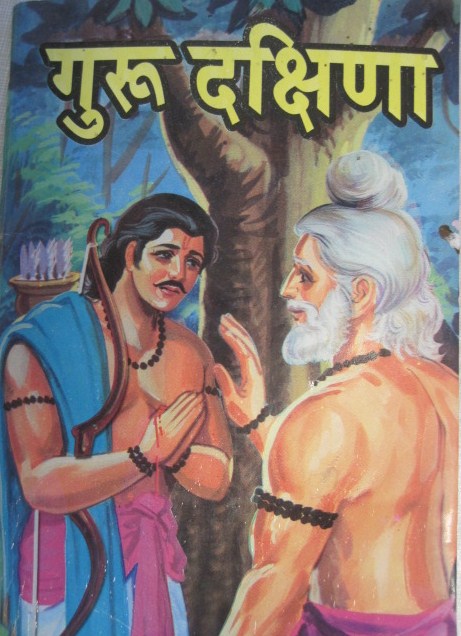
A famous s̕loka on the salutation of the teacher goes like this: “Gurur Brahmā Gurur Vis̕ṇu, Gurur Devo Mahes̕waraḥ, Gurur Sākṣāt pararbrahmā, Tasmai S̕rī Gurave Namaḥ.” This means: Guru is Brahma, Guru is Vis̕ṇu, Guru is S̕iva, Guru is Supreme Brahman Itself, Unto that Guru I prostate. Kabir Das speaks of the greatness of guru in his poem, “Guru Gobind dono khaḍe, kāke lago pāñy?’ Balihāri guru āpne Gobind diyo batāy.” This means: Guru and God both are here to whom should I first bow? All glory to the guru who bestowed the path. The greatness of a teacher can be thus spoken loudly. However, these glorious stanzas will be futile, if the student does not live that greatness in one’s life. It is the guru who teaches the way, shows the way and gives the way. Living the path of Guru is a real gurudakṣiṇā, a student can offer to the teacher. 

Giving gurudakṣiṇā doesn’t mean that a student should cut one’s thumb like Ekalavya. I remember five-fold characteristics upon cultivating in one’s life, a student can offer gurudakṣiṇa to the teacher. It goes like this: “kāgaceṣṭa, bakodhyānam, s̕vānanidrā tathaiva ca; alpāhāri, gṛhatyāgi, vidyārthi pañca lakṣaṇam." This literally means: The perseverance of a crow, Contemplation of a crane, sleep of a dog, limited food and abandoning house are five-fold characteristics of a student. This obviously needs some explanation. 

Kāgaceṣ̕ṭa literally means the perseverance of a crow. Here we need to remember the story of the ‘crow and pitcher’. The crow in the story thinks and makes a deliberate effort to drop pebbles into the pitcher in order to quench its thirst. In other words, the student should do repeated efforts to achieve the success. At the time of high school and college results, several organizations come up with counselling centres to assist the students (and even to the parents) to overcome the fear of failure. The fear of failure is so much that even the government has changed the marking system in the matriculation exam. There is nothing called ‘shame’ if one fails in one’s exam. When Thomas Alva Edison failed several times, he only said, “I haven’t failed. I’ve found 10000 ways that don’t work.” Therefore, the student should realize that ‘failure is the stepping stone to success.’ Add to this, God has created each one differently. One may be good in one field, while the other is best in another field. Realizing one’s weaknesses and working hard to overcome them is the beginning of success. 

Bakodhyāna means the contemplation of a crane. Often in the streams, rivers and ponds, we see cranes standing in one-pointed devotion and concentration (ekāgracitta) waiting eagerly to catch a fish. The slightest disturbance in the concentration will fail in attaining the purpose. The study is nothing but ‘one-pointed devotion’ (ekāgra-bhakti). It is likely to get disturbed in the modern technological world. The electronic gadgets, technological innovations, socializing websites, vehicular pollution create a ruckus atmosphere for the student. But a student should learn to ‘bracket out’ these disturbances and have an ekāgra dhyāna in one’s business. 

The third characteristic is the sleep of a dog (s̕vānanidrā). One of the biggest challenges for a thief to enter a house is the wakeful state of the dog. At times it seems to us that dog is sleeping. But, the slightest sound, a pin-drop sound would be enough for a dog to bark and alert the owner. A student needs to be like this. At every time and moment, we are bombarded by a plethora of information. A responsible student should get awakened from one’s slumber, pick up the issues from here and begin to develop new skills. One can remember Archimedes’ famous dictum, “Eureka”–“I have found it.” Opportunities and ideas do not come every time. At a certain time, they appear and soon disappear. An alert student identifies them, picks them up and runs away shouting “Eureka, Eureka.” 

The fourth characteristic is the alpāhāra, eating limited food. Often it is said, that students should eat good and enough food. It is the time to eat. I do not wish to contradict this, rather I affirm that sufficient nutritious food is essential at the time of studentship. But what is meant by alpāhāra is, that one should be careful about the diet one takes in. Today, in society overeating, obesity and cholesterol problems are increasing which causes lethargy and slothfulness. On the other hand, alpāhāra can also mean the quality of ‘concern for others.’ It means we eat more than what we actually need. Our saving and not wasting food can alleviate the hunger of someone in society. This ditto applies to the financial position of the student as well. If every student thinks that ‘keeping what is actually needed for oneself is that one is entitled to have and keeping what is not needed for oneself is greed, and therefore, the surplus needs to be distributed to others,’ then the world would have been different by now. 

The fifth characteristic is gṛhatyāga, the sacrifice of the house. Originally this meant for the gurukula system where the student would leave one’s home and make the teacher’s home as one’s second home. The word kula in gurukula means, the ‘extended family’ or ‘domain.’ However, in the present system, it could mean a ‘hostel life.’ But the meaning I prefer goes beyond this. Gṛhatyāga could mean the ‘freedom from bondage and boundaries of home.’ There is a ready-made atmosphere or spoon-feeding inclination in every home. Students at times beep upon the success of their parents. However, a passionate student should stand on one’s own feet without building one’s life on their parent’s success, making the best use of the education received and thus be ‘self-confident’ to face the world. This would be the real gṛhatyāga. 

Another important aspect to be pointed out here is the seriousness of one’s ‘studentship.’ It is an important period, a divine call. Therefore, I call it a ‘vocation to be a student.’ If one realizes this divine element in the studentship, one would be really a ‘serious student’ like ‘Arjuna’ for Droṇācārya. If not, the student will become a ‘spoiled brat’ running to the parties, flirting with opposite-sex friends, boozing, taking pleasure in erotic gadgets, becoming a slave to narcotics, goondaism and the like behaviour. This not only diverts their studies but also defames their real home and parents. In the Bhagavadgīta Kṛs̕ṇa says, “s̕raddhāvāml labhate jñānam tatparaḥ samyatendriayaḥ; jñānam labdhvā parām s̕āntim acireṇā’dhigacchati” (Gīta 4:39). It means, “The one who has faith and devotion and has mastery over the senses, gains the knowledge. Having gained this, one at once attains the supreme peace.” One who has control of one’s senses can really attain wisdom and achieve the goal in life. 

To summarize what has been said - perseverance, concentration, hard-work, alertness, concern for others, sharing attitude, self-confidence, etc., are the divine qualities make student, an ideal student. It is these qualities, a guru is interested in. Having known that the s̕iṣya has inculcated these in one’s life, the teacher's life becomes meaningful (sārthaka). This is the real gurudakṣiṇā.

Some quotable quotes 
  • “We need no spiritual masters, we need spiritually evoked souls, who don’t teach and preach.” Jalaluddin Rumi
  • “First of all stop calling yourself a benighted soul and after that, stop calling me a guru. I’m not a guru and no one’s my follower.” Jiddu Krishnamurti
  • “Make no one your guru and you’ll never be disenchanted or duped.” An Uzbeki saying
  • Make your own idol carved out of your inner Self and genuflect before that. Why should you have the encumbrances of god, shrines and scriptures? The truly realized are never interested in becoming gurus.” Sumit Paul in The Speaking Tree
  • “To be a spiritual master is to be doomed.” Rene Descartes
  • “Guru is forever a disciple.” Ramana Maharshi
  • “A real spiritual master has an aura and you immediately recognize him with that sparkling glow. He doesn’t have to blow his own trumpet.” Fariduddin Attar, a Persian poet
  • “A real master has no followers, no home, no property and no social accessories. His own life is a lesson in spirituality. He’s a living enlightenment.” Jean Paul Sartre
  • "Guru is forever a disciple." Ramana Maharshi


Fr. Raju Felix Crasta

Wednesday, 17 July 2013

BEGINNING OF A NEW INNINGS : AS A PROFESSOR OF PHILOSOPHY

Hai friends,


After the gap for about four months, I thought of updating my blog. I am appointed as Professor of Philosophy at St. Albert's College, Ranchi, Jharkhand state.


I have begun my teaching career by conducting orientation for the Philosophers. This year we have 22 Philosophers in the first year. Including the day-scholars and the resident students, the total number of philosophers here are, 72.


Conducting Orientation for the Philosophers

On 9th of July we had our Academic Year 2013-14 open. His Excellency Bishop Chareles Soreng S.J., the Bishop emeritus of Hazaribagh Diocese was the Chief Guest. In the Morning we had a concelebrated High Mass, Bishop as the Chief Celebrant. This was followed by the Inaugural Function in which the Master and Bachelor degrees were conferred. I delivered the Schola Brevis on the topic, "Lokasangraha: the welfare of the worlds. It was my MPh Thesis.


His Excellency Bishop Chareles Soreng S.J. delivering his Sermon

Bishop Awarding the BTh Degree
Me, Lighting the Lamp for the Inauguration
Me, Delivering the Schola Brevis

Me, Delivering the Schola Brevis

Thus, the academic year is kicked off. Now the classes are in full swing. 

This year our Seminary, Albert's college, is celebrating its centenary Year. Various programmes have been arranged. Our Centenary Seminar on "Mission" will be held in Tarunoday on 20th of August. Eminent Scholars - Dr. Felix Wilfred and Archbishop Thomas Menaparambil will share their views and present papers on this day. 

Fr. Raju Felix Crasta

Thursday, 7 March 2013

The Feminine Face of Discipleship


Human being whether male of female, is essentially divine. Often God is understood as male because of patriarchal nature of the society, and forget the feminine aspect, which is equally important than the former. In Christian literature also God is portrayed in the feminine qualities such as generative, sacrificial, loving, compassionate, tender, nurturing, service minded, dedicated and so on. These are also the explicit qualities of the balanced person. Jesus is no doubt a balanced person in all the aspects, who respected and upheld the human dignity at his time in the male dominated society. These are also the qualities Jesus imposes on the person who would like to be called his ‘Disciple’.

In the society we see women subjugated in various aspects. They bear the torture, undergo pain and become subjects of harassment. There are also women, amidst all these problems, bear the pain and ‘stand up’ in the situation. Women are also the ‘masterminds’ to uproot the societal evils. A true disciple of Jesus needs to know and learn these qualities so that he can be ‘another Christ’ for himself and for others and thus to bring the good News of liberation to all.

This is a small effort made to know the qualities of a disciple. It is noteworthy to find out that these qualities are also the qualities every woman possesses specially the women disciples of Jesus. A synthetic approach is being made in the conclusion to inculcate these qualities in the ministry entrusted to us.

1 The Discipleship

1.1 The Qualities of Discipleship

The call for a discipleship involves several aspects. They include, God calls and we accept the call. Once we accept unconditionally, involves our fuller commitment to our ‘yes’ to Him. Finally once when we say unconditional ‘yes’, comes the test, ‘to be identified with the master’.

1.2 A Call to follow

            Whatever we are, wherever we are, God loves us unconditionally, because he wants ‘everyone to be saved’ (1 Tim 2:4) and he ‘doesn’t want any one to be ‘lost’. With this motive, Jesus calls us to follow him. It is a call first and foremost to save my soul and secondly to save souls of the other. His call is a gratuitous call.

1.3 ‘Follow’ – a complete Commitment

God the Father gave the relay baton of salvation to his Only Son Jesus. He won this race through His utmost sincerity and commitment and now the same baton is passed on to me. As a true disciple I must be a person of total commitment and sincerity. For Jesus himself said, “once you put the hand in the plough and look back is not worthy to be my disciple”.

I had a dream of becoming an Engineer but that dream was shattered by the call of Christ. In my following Christ, some time in the middle I was shattered by the attraction towards opposite sex, but I was not shattered. Instead, she by knowing my real intention encouraged me with support and courage.

1.4  The Joy of Discipleship

The story of the Tax collector in Mt. 9:9-17 is a model for Jesus’ gratuitous call of those ostensibly unworthy of discipleship. It is a radical grace enfleshed in the radical demand to follow, a demand which is immediately obeyed. Even though unworthy at the call, after receiving it, the person becomes worthy. The person is spiritually healed, in the very act of physical healing. The inner peace resulting from such grace is noteworthy.

Jesus shows mercy, which is the essence of his messianic mission. He came to call sinners, which imply the recipient’s unworthiness to be called. Jesus shows mercy to Mary Magdalene and latter she becomes the ardent lover and follower of Christ’s mission and thus a role model to be followed by many.

1.5 The Total Renunciation – A Self Denial

The sending of the Twelve among the lost sheep (Mt 10:5-15), incorporates the traditional missionary charge as a sense of reverence and testimony. The rejection of Jesus in his own people and land shows the stringent situation where one needs to work. One is forced to provide new leaders for the shepherdless sheep of Israel.

Missionary needs only basic food and lodging that must be provided as the right by the ones they serve. Wherever they go, are not to seek out better lodging later. The worth of the host is no doubt to be judged by the acceptance of both messenger (hospitality) and the message (faith). Both of them go together.

1.6 Persecution, the Identification with the Master

     The cost of discipleship is the persecution and persecution is the identification of the disciple with the Master. ‘The disciple is no superior to his master. If they’ve called the master the house of Beelzebub, what will they not say his house-hold?” (Mt. 9:34, 12:24).

During the persecution one must not be fearful for He says. “Fear not for I am with you” (Jer 1:7-8). Dispite imprisonment, the persecution cannot keep the Gospel message hidden. It will be out in the light.

2. The Feminine Face of the Discipleship

2.1  Christ’s feminine face to follow

Christ is Son of God and Son of Man and yet He is both male and female. Isn’t this a paradox? Yes, it looks like a paradox. Carl Gustav Jung speaks of ‘self’ as ‘Androgyny’ which refers to the presence of both masculine and feminine qualities in an individual and the ability to realize both potentialities. Thus a human being is both masculine and feminine consisting of anima-animus, personal-shadow, body-mind and conscious-unconscious (Theories of personality by Barbara Engler). A balanced person knows to harmonize these qualities well in one’s life. All the qualities said earlier like mercy, sacrifice, self-denial, persecution, joy can be applied to a woman. She is an embodiment of all these characters. Jesus incorporated all these qualities in his public life, in his existential dealing with the reality, with both men and women.

2.2 The Feminine Qualities

2.2. 1 Courage

To follow someone breaking the boundaries of tradition and culture in the society amidst all the ups and downs needs courage and boldness. Some of the women have shown it like Martha, Mary Magdalene and Mother Mary herself (Mk 15:40-41, 16:1-7).

2.2.2 Self-Denial

‘If you want to follow Christ, leave everything, take up my Cross and follow me”. These words were very much true in the case of Mary Magdalene, the Samaritan woman etc. Once they knew Him, surrendered totally to Jesus. Samaritan woman goes a step ahead, ‘leaves everything’ and announces about Jesus in her village, Martha, forgets everything and chooses the right spot, ‘to listen’ at the feet of Jesus (Lk 10: 38-42).

2.2.3  Persecution

    Mother’s love to the child is unconditional. Likewise, Mother Mary loved her son unconditionally. From the conception till the death of Jesus, in all her sons’ good and tough situations, she was there to assist his son. As Simeon prophesized a ‘sword was piercing’ Mary’s heart at every moment of Christ’s hardship. This is nothing but the authentic example of true discipleship. Jesus moving with compassion for the trouble the women took, feels sorry for them and says at the way to Calvary, “Do not cry.”

2.2.4 Dignity of person

Society looks women down upon. This was true even to the time of Jesus. Knowing this reality, Jesus upheld the right of women. This is clear from the incident where Jesus raised the widow’s son to life (Lk 7:11-17), the story of Mary Magdalene (Lk 7:36-50), the healing of crippled woman on the Sabbath day Lk 13:10-17), woman searching for the lost coin which symbolize the search of lost humanity (Lk 15:8-10), and the widow demanding justice (Lk 18:10-18) etc.

2.2.5 Joy

‘Assurance’ of discipleship can be said to be fulfilled when the person receives inner peace. Because of the tremendous love and concern for the women and their dignity, Jesus blesses them and makes them as the first ‘Apostles’. It is none but the once sinner Mary Magdalene was sent as ‘apostle’ to proclaim good news to his brothers, and not the 12 who were always with him. It was when Mother Mary was present, the promised Holy Spirit descended upon them.

Thus Jesus had a balanced outlook of personality. By being male He had the characters of female. The qualities said to be feminine such as sensitivity, love, service, self sacrifice, or self-denial, hard work, tenderness, commitment were synonymous with his personality. Jesus demands these same qualities from His would be follower.

3. The Synthetic Approach to Follow Christ

The characters said to be feminine are also the characters needed to be a good disciple of Jesus. What Jesus did at His time in society is also demanded of today. Today’s society is mainly male dominated one, except for a few which see women as equal to men. But there is hardly any culture which see women as superior to man, they are always the weaker sex. Today the task given as St. Paul rightly pointed out is ‘to become another Christ.’ Therefore to become another Christ I need to inculcate a balanced personality within. I must have a balanced approach towards everyone.

3.1 Integration into the ministry

     If I go to people with my patriarchal personality, I will be a failure and if I go with the feminine personality I will be of no value. To keep the boat safe and keep going, I must first and foremost have a balanced approach.

There is always a growing tendency to get alienated from the opposite sex. My experience has taught me that ‘women can change’ the society more than the men. Therefore to bring a positive development in the society our main weapons are the women. Therefore to have a good rapport in the workplace, in the social sectors, I need to cultivate the qualities of love, service, sensitivity, joy, peace, perseverance, hard work, self-sacrifice etc which would enable me to be a better disciple of Jesus.

Discipleship is a deep experience or a deep relationship between the master and the disciple. A true disciple is one who follows the footprint of his master. A Christian discipleship is the ever-deeper growing life of faith in Christ or the experience of Christ, and its highest stage is to remain in faith and love with Christ. Thus a Christian disciple is the one who hears, follows, seeks, finds, comes, sees, and remains with him. The women disciples of Jesus in this sense were the true disciples. This fact challenges me to be an authentic person to like those women disciples.

Raju Felix Crasta

Sunday, 10 February 2013

A MEDITATION ON HANDS

I am sharing with you a beautiful story which I received a few days ago. It really challenged me and my actions. Hope the readers will appreciate it. The author of this story is anonymous to me. 


A MEDITATION on HANDS


An old man, probably some ninety plus years, sat feebly on the park bench. He didn’t move, just sat with his head down staring at his hands. When I sat down beside him he didn’t acknowledge my presence and the longer I sat I wondered if he was okay.

Finally, not really wanting to disturb him but wanting to check on him at the same time, I asked him if he was all right. He raised his head and looked at me and smiled.

“Yes, I’m fine, thank you for asking,” he said in a clear strong voice.

“I didn’t mean to disturb you, sir, but you were just sitting here staring at your hands and I wanted to make sure you were okay,” I explained to him.

“Have you ever looked at your hands?” he asked. “I mean really looked at your hands?”

I slowly opened my hands and stared down at them. I turned them over, palms up and then palms down. I guess I had never really looked at my hands as I tried to figure out the point he was making.

Then he smiled and related this story:

Stop and think for a moment about the hands you have, how they have served you well throughout your years. These hands, though wrinkled, shriveled and weak have been the tools I have used all my life to reach out and grab and embrace life. They braced and caught my fall when as a toddler I crashed upon the floor. My hands put food in my mouth and clothes on my back. As a child my mother taught me to fold them in prayer. They tied my shoes and pulled on my boots. They dried the tears of my children and caressed the love of my life.

My hands held my rifle and wiped my tears when I went off to war. They have been dirty, scraped and raw, swollen and bent. They were uneasy and clumsy when I tried to hold my newborn son. Decorated with my wedding band they showed the world that I was married and loved someone special. My hands wrote the letters home and trembled and shook when I buried my parents and spouse and walked my daughter down the aisle. Yet, they were strong and sure when I dug my buddy out of a foxhole and lifted a plow off of my best friends foot. They have held children, consoled neighbors, and shook in fists of anger when I didn’t understand.

My hands have covered my face, combed my hair, and washed and cleansed the rest of my body. They have been sticky and wet, bent and broken, dried and raw. And to this day when not much of anything else of me works real well these hands hold me up, lay me down, and again continue to fold in prayer. These hands are the mark of where I’ve been and the ruggedness of my life.

But more importantly it will be these hands that God will reach out and take when he leads me home. And He won’t care about where these hands have been or what they have done. What He will care about is to whom these hands belong and how much He loves these hands. And with these hands He will lift me to His side and there I will use these hands to touch the face of Christ.

No doubt I will never look at my hands the same again. I never saw the old man again after I left the park that day but I will never forget him and the words he spoke.

When my hands are hurt or sore or when I stroke the face of my children and wife I think of the man in the park. I have a feeling he has been stroked and caressed and held by the hands of God.

I, too, want to touch the face of God and feel his hands upon my face.

Thank you, Father God, for hands.

Monday, 17 December 2012

WORD BECAME FLESH


It is a great privilege and pleasure to share some reflections on the solemnity of Christmas. At the outset I am most beholden to God for having given us this wonderful opportunity to assemble as one family to celebrate the divine Presence, Emmanuel (God-with-us).


The angel said to the shepherds, “Do not be afraid, for see — I am bringing you good news of great joy for all the people: to you is born this day in the city of David a Savior, who is the Messiah” (Luke 2: 10-11). Therefore, do not be afraid, but rejoice because the Messiah is born in the city of David. Christmas celebration is the festivity of joy, blessing of peace, beauty of hope, spirit of love, comfort of faith and community of fellowship. It is also a time of healing and renewing our strength.

However, Christmas is a blend of joys and sorrows: it is joy for those who have more, but it is sorrow for those people who have not; it is joy for shopkeepers, but sorrow for parents who don’t have extra money to buy gifts for their children, family and friends; it is joy for drunkards and addicts to make merry, but it is sorrow for their families. It is joy for coming together as one family, but it is sorrow for those who miss their loved ones due to unavoidable reasons. Amidst these confusions, conflicts, contrasts and confrontations; the question which needs to be reflected upon is, ‘what is the real message of Christmas?’
For some people, the true meaning of Christmas is warmth and love of their families; a celebration of home/homely atmosphere. For some, the real meaning of Christmas is love for the other or good will towards men and women. For some, it is singing of carols; and for some, it is making a fabulous, attractive and charming crib. But the real meaning of Christmas lies in the doctrine of ‘incarnation’ or “word becoming flesh” or the transcendental God becoming immanent God. ‘Word becoming flesh’ does not mean that we have to learn to be fleshy. It means that we become more like God in our words and deeds. In other words, Jesus has not come to appreciate our status of life in which we live; rather he has come to give us a life that cannot be achieved through our flesh.

Therefore, the ultimate aim of Christmas is to recognize the presence of God, as three wise men recognized the Presence in the least expected place (manger). How to recognize, where to recognize and when to recognize is not the matter of our thought. For, the Real Presence is with us (Emmanuel). Recognizing the Self through the self is a greatest challenge. If I am able to recognize it, I automatically become light to the other. This will ultimately enable us to build up our community with love, friendship and fellowship. Recognizing the divine presence in our community will enable us to find the Presence in the little ones, poor, downtrodden and marginalized. This is the real Christmas, and this is the greatest joy. This joy is being communicated through our external activities. Let us recognize the Presence in little ones and enjoy the Christmas with a meaningful celebration.


Wish you all my well-wishers and readers 

Merry Christmas 

and

grace filled New Year.


Raju  Felix  Crasta


Wednesday, 12 December 2012

THE GRASS IN THE OTHER SIDE IS GREEN


A few months ago one of my priest friends asked me to pray for his ailing father who is suffering from Cancer. He is diagnosed from that sickness a couple of years ago. Back to back, I had a sudden call from home. My dad was seriously ill due to severe breathing problem and Asthma. When I went home another news was awaiting me. One of my childhood friends who is now a priest, told me that he lost his father due to cancer a couple of days ago and yet his grandfather who is 98 years old is still strong and healthy.  

These incidents do not stop here. I started to think about priests and religious who have sacrificed willingly to the service of God. How God is awarding them the sweetness of the Cross. All the priests who are serving in the near and far away places have some similar story to tell. One has his mother ailing, the other has his father bedridden, the other suffering from unknown disease, one has lost his parent in the early age, one is suffering himself due to some miserable accident and so on and so forth.

This is not the only case with priests. Ditto is found among the women religious too. Though at times see ‘all is well’ there is something miserable underneath. One of my nun friends told me that she is unable to pray and do her work when she thinks about her parents. She wanted to be at home to take care of the parents. Another nun too has a similar story to tell who has lost her both parents. Her only brother who is the backbone of the family, is now seriously sick and has no one to take care.

I was happy to see my brother taking care of my bedridden father. Once he told me this, “if there is a priest or a nun in any family, one of the family members will be seriously in need of care and service especially the parents.” For me these are the prophetic words and they are very much true. Only a deep religious person can utter those words. By that service they raise their mind and heart to God. Their sacrifice and service to the ailing person is itself a prayer and devotion to the creator.

At times, the sickness, loss of our parents, is a divine providence. They happen for the greater good. There is nothing in the world happen without the knowledge God, so much so, a leaf does not fall from the tree without a silent approval from the Creator. So too with us, who have willingly sacrificed ourselves to the divine Call. Every action of ours, every inch of suffering we undergo, every torment we face will not go futile without having yielded its fruit. Everything happens for the good.

A young, professed religious nun once came to me sobbing who had lost her mother in the near past asked this question, “why did God take away my mother?” I told her, “God took away your mother, so that you can be a good mother for the motherless thousands of children. By losing your mother you are experiencing a tremendous pain. God is allowing you to experience this. Much more is the pain of those children who have not even seen their mother. You need to be a mother for them, a sister for them, a teacher for them and a guide for them.” The same is true with the sickness and other problems. A devout and selfless person will experience more crosses and hurdles in one’s life directly or indirectly. This is a fact.

There is a greater trauma in one’s life especially when one is far away from home. At times, I feel very much this, “in spite of having worked selflessly for the Kingdom of God for which God has called me, why is he allowing me to undergo such tension?” When I hear that my dad is sick or my mom weeping over the phone telling me the difficulties they are facing at home, I have no words to console them. I feel emotional. Find difficult to answer. Even, I feel that my study of philosophy, theology, MA or MPh or diplomas and degrees are useless badges. What have they taught? Rut, rut and rut. Which words should I use to console them?

The only solace is the Word of God. A deep conviction and faith in Christ. I assure them that their difficulties will be blessed. They would see the bright sunlight one day. Everything will be alright. As a priest, I remember them all, take all the sufferings put into the Chalice and Paten at the Eucharistic table and say, “Blessed are you, Lord, God of all creation. Through your goodness we have this bread to offer, which earth has given and human hands have made. It will become for us the bread of life. Blessed are you, Lord, God of all creation. Through your goodness we have this wine to offer, fruit of the vine and work of human hands. It will become our spiritual drink.” I believe and is my conviction, that God takes care of the rest.

As a Vocation Promoter, I find difficult to promote the young hearts. Often I hear from the young people I meet, that many Promoters come and show them good pictures, assure bright future, luxury life in religious life and thus recruit for their congregation and they are able to get some candidates. Should I tell the reality or create a false reality and convince them? Vocation is a Gift of God and so too are the difficulties. The first thing when a person approaches me to become a priest or a nun, I tell them is, “It is not easy. The grass in the other side is green. If you are able to face the current you are most welcome.” During the course of formation, some withstand the pressure and some succumb to it. When those who feel that ‘this is not their way of life’ and go back, often their parents ask the question, “What was wrong in the Seminary? Why did they send my son back?” Who has to answer – the vocation promoter, the rector or the seminarian? This kind of questioning is more common among the women than the men.

How often, we realize the truth that a priest or a religious is suffering silently? Though they do not shed their tears in front of others, always eager to help, seen smiling 24x7x365 days this is the reality one faces. Those who cannot read the hidden lines, priest is, ‘always late, lazy, boring sermons, no depth, crazy, modern, luxurious, unavailable….” No doubt, there are such ones but not all. If there are sinners there are also saints. May the life of good of priests and religious inspire all to take the challenges / difficulties of life and make the life palatable and worth living.


Raju Felix Crasta 


image source: http://th06.deviantart.net/fs70/200H/i/2010/340/1/1/winter_song_by_kirahero-d34cy6m.jpg

Wednesday, 28 November 2012

FIVE RUPEES


Few days back I was travelling in the train. A vendor came selling water. I purchased a bottle of water worth 15 rupees and gave him a twenty rupee currency. The vendor asked for five rupees since he had no five rupee coin and I too did not have and said, “I don’t have.” Then the vendor said, “I am the only vendor selling water in this train and I shall give you back five rupees before you alight the train.” After some time, I wanted to have a cup of coffee and there came another man selling coffee. I asked, “How much” and he said, “Five rupees.” I gave him ten rupee currency. This time too neither I had a five rupees nor he had (!?). He too assured me that he would return my five rupees before I would reach my destination. But to make my confusion still worse, there were several coffee-tea and water vendors. Now my confusion was this, ‘which vendor owes me five rupees?’ Every time a Chaiwala or Paniwala was passing by, I had to pay attention to his identity in which I failed miserably. In fact I asked one chaiwala, “are you the one who owe me my five rupees?” He plainly said, “Sir, I am not. May be another man.” I thought it is better to keep quite than getting humiliated. Till I reached my destination, neither of them came to give my due nor I was able to trace them out.

There was a family sitting next to my berth. When at the time of supper, a vendor came selling Vegetable and Egg Biryani.  He bought two Egg Biryani and one Vegetable Biryani. The Vegetable Biryani costs fifty and Egg Biryani costs sixty rupees. Then only we realized that the same food which we ate at noon was charged more by another vendor. We had purchased the Vegetable Biryani for sixty rupees and Egg Biryani for seventy in the afternoon.  Then I asked him in Hindi language, “yah kaise aap sham ke vakt 50 aur 60 me de rahe hain aur dopahar ko 60 aur 70 rupaye lete hain?” Then he told us that the man who sold the food in the afternoon has taken more from us. This time lucky enough, the man who cheated us in the afternoon came that way and my neighbor held him. Without a second thought he returned his thirty rupees and slipped quietly.

These are not the instances happened to me by chance. These are the experiences of several people who travel often. It is not possible to carry coins every time. Vendors take this opportunity to grab from the passengers. The coffeewala had no five rupee to return to me but he had five rupee when a woman purchased a coffee few berths after me.

This does not mean that there are no honest vendors. There are people who serve you with love and care whose motto is, “the customer’s satisfaction is our satisfaction.” I too have come across several such people. They give the right information and service out of their generosity. But few selfish and dishonest people spoil the good reputation of other good people as it is said, “one rotten potato spoils the whole sack.” All the vendors I encountered in the above incident are from the IRCTC who give quality service to Indian Railways to which I am very much indebted.

One can go up to the grievance’ cell and report about the quality and reliability of the service of its workers. One can say, “Why so much fuss for five rupees? After all, you will have to pay another five hundred rupees in order to get your five rupees.” Thus, looking at the complications involved, one will surely back out. But the issue is, how far we are honest in our dealings?  A person who has enough and more things to do will not be able to spend time for such things. Complaining to the authorities concerned, will earn justice to the afflicted person and a time to correct the behavior of the culprit. It can teach a lesson to others. But again, how long and how far?

We need to raise our voice when someone takes undue advantage over us. It is our right and duty. At the same time we need to question the person when we see the injustice to be done. It may be my five rupees or another person’s five thousand rupees. It may be a piece of land or an acre of land. One may not speak or raise one’s voice due to fear or humiliation. It is our collective duty to safeguard human right, dignity and freedom. 


Picture source:  https://encrypted-tbn0.gstatic.com/images?q=tbn:ANd9GcQC3FXShxDhvuzC163eZEH5IwPessjE0ZKpBguPmSJaWzIYli6H

Thursday, 15 November 2012

FREEDOM AT THE CROSS-ROADS


Who
says that being free we are really not free? How dare are you to say, “India is in manacles.” Have we not got more freedom here than there in Heaven? Of course, we do have. Therefore, the question, “Where is thy freedom?” is an unnecessary bullshit! Then, listen carefully, understand and reflect. Am I not right in what I say? Have I no freedom to puke what I want? I will say what I want to say. You may christen me crazy, for you’ve your freedom.
Who
said that we have no freedom to use the world as we like? Peel the plantain, eat and throw the skin on the road. Smoke bundles of bidis and cigars and throw the buts in the public places. Empty the kitchen waste in the main road. Throw your dead pets and animals in the uncovered gutters of the municipality. Let others see and enjoy. Drive your vehicle as you like, honk as you wish and dash into whomsoever you want. No problem! After all it is your vehicle. You’re free to use it. Change the party as you wish at any time. You are free. Pelt stones at public vehicles, shops and offices as you used to throw at the ripe mango when you were young. Not yet satisfied? Enflame them! They are all at your service. After all, it is a democratic country! You have won freedom just a few days ago.
Who
said that we’ve no freedom here? Who said that the freedom given for us is barricaded? To do what you want is freedom. You are given ample freedom and that too coagulated with responsibility. But you say, responsibility with freedom is a redundant absurdity. Rightly you’ve said it, ‘policing in my privacy is curtailing my freedom.’ ‘I dance and sing 24x7, because, I am responsible for my future. Who are you to dictate?’
Who
said our country is in the dark? Climb up to the terrace at night and have an aerial appraisal and see the beautiful panoramic towns twinkling like the sky and sing the rhyme, “twinkle twinkle little star, how I wonder what you are…” Who said our country is in BPL? Go for an evening walk, look at your right side, people are living in the castles. Their buildings are touching the sky like the Tower of Babel. Beware, how dare you are to glare at the left side, for there only demons live! Know this, that though our views have narrowed, yet no problem, our roads have broadened. Though we need only one child, the divorce rate has increased. Though our farmers do not get enough seed to sow, don’t worry our godowns are full. Though our children go hungry, we export enough food to alleviate hunger. Are we not good Samaritans? What else do we need?
Who
said we are intellectually abaft? Though our knowledge has weakened, our degrees and diplomas are increasing. Though we don’t get permission to open LKG and nursery schools, no permission is prerequisite for IITs, Engineering and Medical colleges, for they decide the GDP. Though our bullock-carts have not vanished, we ’re successful in organizing space-walk picnics. Though our reasoning has become weak, our aptitude for knowledge has increased. Though diseases have increased, medicines too have increased. The learned proclaim that the “decrease in adult mortality and increase in child mortality” is a sign of social awareness. What a paradox! So they don’t need LKGs.  Though we’ve stopped smiling and cheering, has not our shouting and yelling in the bars and pubs increased? And you say ‘it is modern a gurukul.’ Though we are unable to think afresh, there are enough think-tanks to think for us. So, why worry on unnecessary supranno?  After all we’ve money to pay. Though our appetite has declined, our fast-food centers are mushrooming. Though we’ve not learnt to live, we’ve learnt to live in the towns and metropolis. See how posh we are!
Who
said our spirituality has gone wrong? Though we don’t pray, our shrines on the roads are increasing. Shrines and worships are their needs and not my need! Simony is law of the land. My share is my right! Though we fail to bring people to God, we are able to empower them with our lofty ideals. Though we don’t practice what we ought to preach, the hidden mysteries of the Kingdom of God, our preaching has not gone down with our mysterious agenda. Though we are unable to bring glorious revolution, we are talented to bring gory revolution. Is not Gurudev Tagore ubiquitously wrong, “Leave this chanting and singing and telling of beads! Whom dost thou worship in this lonely dark corner of a temple with doors all shut? Open thine eyes and see thy God is not before thee! He is there where the tiller is tilling the hard ground and where the pathmaker is breaking stones. He is with them in sun and in shower, and his garment is covered with dust….” We want to demolish one mosque and build a temple over there; demolish temple and build church over there, destroy that statue there and erect this one here. Though God protects us, we think we need to protect God! People of the country are the 'uncivilized vanvasis' while the others are 'civilized citizens'! This is the religion. This is the freedom of religion which my country proclaims today! I am proud of it!
Who
said our leaders are bad? Though they are producing and blasting tons of granite, receive handsome black bags and parade in scamy adventures, their hearts are soft like sponge! Today they blast granite and tomorrow weep at the blasted granite. Today they beep up for trekking and tomorrow receive medals of bravado. Though they cannot write their names, they’ve their secretaries to write for them. See, how faithfully they work for you! Every minute and second busy in writing and signing MoUs of MNCs, and other project works. MNS and Corporates, Amabanis and Adanis are their revered guests who only can uplift the poverty in India. They are busy in developmental acts to attend your calls, so don’t disturb them. Let them have the pleasure of serving you when they get time. That is why you have chosen them. Though we’ve no sandals to wear, they are busy funding pedal-less cycles for your sisters in the villages. You are healthy to drink murky water, that’s okay; but if they drink, who will cure them whilst they fall sick? So allow them to drink ‘bisleri’ water. They have passed bills in parliaments for wells and ponds for farmers. But you see, the delay of boring is due the punctured wheels of the trucks! If the present project has not addressed the 250 million farmers; don’t worry, the next 5 year plan will address their needs.
i
I find it difficult to understand what our Father wrote, the day after Independence: “We’ve achieved political freedom, but we’ve not yet achieved economic, social and moral freedom. It is a difficult task to achieve.” Is not Gandhi wrong!? I have the freedom to do what I want. I can raise my moral, social and economic standard. Therefore, I am not enslaved. Therefore, let us rejoice, celebrate and be proud! This is my nation, my country and I am proud of its heritage!


Fr. Raju Felix Crasta


Picture source: